Ecuador's Cocaine Route to Europe: Police Battle Surging Drug Crime
Discover how Ecuador's police force tackles the cocaine superhighway to Europe. BBC investigates gang operations and law enforcement's ongoing fight against drug trafficking.
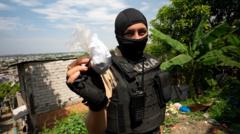
Ecuador's Cocaine Route to Europe: Inside the Drug Trafficking Crisis
Ecuador's cocaine superhighway to Europe represents one of the most critical drug trafficking challenges facing law enforcement in the Western Hemisphere. As criminal organizations intensify their operations, the country's police force finds itself on the frontlines of an unprecedented surge in narcotics-related violence and organized crime.
The Growing Threat of the Cocaine Superhighway
The cocaine superhighway extending from Ecuador to Europe has become a major conduit for international drug trafficking networks. What was once a regional concern has evolved into a sophisticated criminal enterprise involving multiple transnational gangs. These organizations exploit Ecuador's geographic location and porous borders to funnel massive quantities of cocaine northward and toward European markets.
The scale of the problem has reached alarming proportions. Law enforcement agencies report an exponential increase in drug-related incidents, with violent confrontations between rival cartels becoming increasingly common. These conflicts have destabilized entire communities, claiming innocent lives and overwhelming prison systems throughout the country.
Police Operations and Frontline Efforts
Ecuador's police departments have intensified patrol operations in regions known for significant drug trafficking activity. Officers working these dangerous routes face threats from well-armed criminal syndicates equipped with military-grade weapons and substantial financial resources. The disparity in firepower and funding creates significant operational challenges for traditional law enforcement approaches.
Patrols conducted through strategic corridors reveal the systematic nature of cocaine distribution networks. Officers encounter makeshift laboratories, trafficking waypoints, and armed sentries protecting shipments destined for international markets. These operations require careful coordination between multiple police units and intelligence divisions working to dismantle trafficking infrastructure.
Gang Operations and Criminal Networks
Multiple criminal organizations control different segments of the cocaine superhighway route. These gangs employ sophisticated methods to transport narcotics, including maritime smuggling, commercial shipping container concealment, and air transport via clandestine airstrips. Their organizational structure mirrors legitimate business operations, with specialized divisions handling production, transportation, distribution, and money laundering.
Gang violence has become endemic in areas surrounding major trafficking routes. Rival organizations engage in territorial disputes that frequently result in homicides, kidnappings, and extortion. These criminal enterprises have effectively established parallel governance systems in certain regions, controlling local populations through intimidation and violence.
The International Dimension
The cocaine superhighway connects Ecuador's production regions to distribution networks throughout Europe. Criminal organizations have established permanent operational bases in European cities, transforming the continent into a major consumption market. This international dimension requires coordination between Ecuadorian authorities and foreign law enforcement agencies, creating complex jurisdictional and diplomatic challenges.
European drug seizures consistently reveal Ecuadorian origins, confirming the effectiveness of trafficking routes. Port cities and international airports serve as critical transfer points where shipments change hands between regional and continental operators. The profitability of these operations—driven by extreme price differentials between production and consumption markets—ensures continued criminal investment in maintaining and expanding these routes.
Challenges Facing Law Enforcement
Ecuador's police confront numerous obstacles in combating the cocaine superhighway trade. Limited budgets restrict equipment availability, training opportunities, and operational capacity. Corruption within government institutions compromises enforcement efforts, as traffickers strategically place operatives within regulatory bodies and law enforcement agencies. Prison overcrowding has reached crisis levels, making incarceration an insufficient deterrent.
Resource constraints force difficult prioritization decisions. Police must balance street-level drug enforcement with investigations targeting major trafficking organizations. Meanwhile, criminal enterprises continuously adapt their methods to circumvent interdiction efforts, investing substantial resources in innovation and operational security.
The Path Forward
Addressing the cocaine superhighway challenge requires sustained commitment to police capacity building, inter-agency cooperation, and international collaboration. Successful strategies must simultaneously target trafficking infrastructure while addressing underlying conditions that enable drug production and organized crime. Community engagement and alternative economic development initiatives represent essential components of any comprehensive approach.
The battle against Ecuador's cocaine superhighway and associated gang violence represents an ongoing struggle requiring persistence, resources, and strategic planning from law enforcement authorities at all governmental levels.