Hamas Disarmament Strategy Encounters Major Hurdles Despite Offering Gaza's Best Prospect
Hamas disarmament plan faces significant political and military obstacles but represents a critical opportunity for Gaza's stability and peace prospects.
Hamas Disarmament Initiatives Face Substantial Challenges Amid Conflict Resolution Efforts
The proposed Hamas disarmament plan represents one of the most ambitious yet fragile pathways toward establishing sustainable peace in Gaza. While the Hamas disarmament plan continues to generate international dialogue, experts acknowledge that implementing such a comprehensive agreement will require navigating unprecedented political, military, and humanitarian complexities that have plagued the region for decades.
Achieving meaningful progress on the Hamas disarmament plan demands unprecedented levels of cooperation among stakeholders who have historically maintained deep-rooted animosities. The intricate nature of regional politics, coupled with the devastating toll of armed conflict, means that negotiators must address not only military dimensions but also the psychological and social divisions that prolonged warfare has created among civilian populations.
The Political Landscape Surrounding Disarmament Negotiations
Political realities present formidable barriers to any comprehensive disarmament agreement. Multiple factions maintain competing interests and strategic objectives that frequently conflict with broader peace initiatives. Government entities, international mediators, and armed groups all bring distinct agendas to negotiation tables, making consensus-building extraordinarily difficult.
Trust deficits between parties fundamentally undermine the foundation necessary for successful disarmament frameworks. Decades of broken agreements, violated ceasefires, and mutual accusations have created an environment where verifying compliance becomes as challenging as achieving the initial agreement itself. Without robust verification mechanisms and neutral international oversight, parties remain skeptical about whether opponents will honor their commitments.
Military Complexities and Weapons Proliferation Issues
The military dimension of disarmament extends far beyond simple weapons collection. Underground tunnel networks, hidden weapons caches, and decentralized command structures complicate any effort to account for all armaments and military capabilities. Armed organizations have developed sophisticated methods for concealing resources, making comprehensive inventories nearly impossible without extensive cooperation and transparency.
International arms smuggling networks continue supplying weapons to various factions despite peace negotiations. Controlling these illicit supply chains requires coordinated action among multiple nations and international organizations, a level of cooperation that remains elusive in practice. Each new conflict cycle potentially introduces additional weapons into already saturated markets, making disarmament increasingly complex.
Humanitarian Catastrophe and Its Consequences
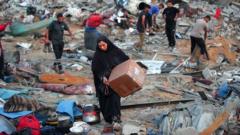
The unprecedented destruction and massive loss of life resulting from recent military operations have created deep psychological wounds within civilian communities. Thousands of deaths, widespread displacement, and the destruction of essential infrastructure have left populations traumatized and skeptical about whether peace agreements can genuinely improve their circumstances. Grief-stricken communities often harbor desires for accountability rather than reconciliation, creating obstacles to forgiveness and cooperation necessary for sustained peace.
Reconstruction efforts, while essential, cannot adequately address the psychological and social impacts of prolonged conflict. Mental health crises, trauma responses, and collective grieving processes require sustained attention long after military hostilities cease. These emotional and psychological dimensions often receive insufficient attention in formal peace negotiations, yet they remain critical for genuine reconciliation.
Why This Initiative Offers Meaningful Hope for Gaza's Future
Despite substantial obstacles, the Hamas disarmament plan represents the most concrete proposal addressing the region's foundational security concerns. International engagement at unprecedented levels demonstrates commitment to finding sustainable solutions rather than merely managing cyclical violence.
Success with the Hamas disarmament plan could establish precedents for addressing similar conflicts globally. The framework, if implemented successfully, would provide valuable models for transforming armed organizations into legitimate political entities committed to democratic processes. Such transformation, while extraordinarily challenging, offers pathways toward genuine stability.
Requirements for Moving Forward
Effective disarmament agreements require transparent mechanisms for verification, protection of civilian populations during transition periods, and genuine commitments to addressing root causes of conflict including political representation, economic opportunity, and security guarantees. All parties must acknowledge past grievances while simultaneously committing to forward-looking solutions.
International involvement remains essential throughout implementation, ensuring that no single party can unilaterally undermine agreements. Neutral mediators, peacekeeping forces, and independent monitors must maintain presence and authority to enforce compliance while building confidence among previously antagonistic parties.