Hundreds Flee Greece Wildfire by Sea Amid European Blazes
Around 500 tourists evacuated by boat from Agios Vasileios during intense Greek wildfire. Europe faces severe blazes as heat waves persist across the continent.
Greek Wildfire Forces Sea Evacuation
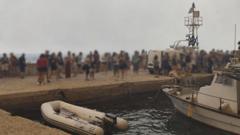
A major Greek wildfire evacuation operation unfolded when approximately 500 people, predominantly international tourists, were rescued by maritime vessels from the coastal settlement of Agios Vasileios. The Greek wildfire evacuation marked one of the most dramatic rescue efforts as visitors and residents found themselves cut off by rapidly advancing flames.
Emergency response teams coordinated a swift sea-based rescue mission, deploying multiple boats to transport stranded individuals to safety. The decision to evacuate by water became necessary after ground routes were compromised by the spreading flames consuming vegetation and threatening structures across the region.
Scale and Impact of the Greek Wildfire Evacuation
The Greek wildfire evacuation involved hundreds of people who had been enjoying the coastal area when fire conditions deteriorated rapidly. Authorities acted decisively to prevent casualties, implementing emergency protocols that prioritized maritime transport as the safest extraction method available.
Local authorities coordinated with coast guard vessels and private maritime operators to ensure swift passage away from danger zones. The evacuation process demonstrated the importance of having multiple emergency response strategies when conventional road-based exits become impossible due to environmental hazards.
Broader European Fire Crisis
Beyond the Greek wildfire evacuation scenario, Europe faces an unprecedented fire season affecting multiple countries simultaneously. Blazes continue spreading across Mediterranean nations and beyond, driven by record-breaking temperatures and drought conditions that create ideal circumstances for rapid fire propagation.
Portugal, Spain, Italy, and other European nations are simultaneously battling major fire incidents, straining resources across the continent. These coordinated wildfire outbreaks underscore the devastating impact of extended heat waves on landscape vegetation and infrastructure across diverse regions.
Climate and Environmental Factors
The current wildfire epidemic across Europe reflects alarming climate patterns dominated by excessive heat and minimal precipitation. Extended periods without rainfall have left vegetation critically dry, transforming forests and shrublands into tinderboxes susceptible to rapid ignition and spread.
Scientists attribute the intensification of European fire seasons to shifting climate patterns, with heat waves becoming more frequent, prolonged, and severe. These conditions create cascading effects that increase wildfire frequency, intensity, and difficulty of containment efforts across affected territories.
Emergency Response and Future Preparedness
The successful Greek wildfire evacuation demonstrates essential coordination between multiple agencies and resource providers. However, the broader context of simultaneous European fires highlights gaps in continental preparedness for increasingly severe weather events.
European governments are reviewing disaster management protocols, expanding firefighting resources, and enhancing early warning systems. The need for international cooperation becomes increasingly apparent as wildfire smoke crosses national borders and fire conditions affect air quality across wide geographic areas.
Recovery and Rebuilding
Following the Greek wildfire evacuation, authorities face challenging recovery phases involving damage assessment, environmental restoration, and support for affected communities. Residents and business owners in impacted areas require assistance rebuilding infrastructure destroyed or damaged by intense heat and flames.
The environmental consequences extend beyond immediate destruction, affecting ecosystems, wildlife habitats, and long-term forest regeneration across affected regions. Recovery timelines vary significantly depending on fire intensity, area coverage, and available restoration resources.
As Europe continues battling widespread wildfire incidents, lessons from the Greek wildfire evacuation and similar emergencies inform ongoing crisis management strategies. Building resilience requires sustained investment in prevention, response capability, and climate adaptation measures addressing root causes of escalating fire seasons across the continent.