Iran's Limited Conflict Strategy Could Benefit More Than Full Peace
Discover why Iran might prefer controlled confrontation with the US over peaceful resolution. Analyzing limited war strategy and geopolitical implications.
Iran's Strategic Calculation in Limited Conflict
A limited war approach with the United States may present more advantageous outcomes for Iran than pursuing comprehensive peace agreements, according to regional analysts examining contemporary Middle Eastern dynamics. This Iran US limited war scenario reflects complex calculations regarding power projection, domestic politics, and long-term strategic positioning in a volatile region.
Tehran's perspective on controlled confrontation stems from multiple converging factors. Rather than accepting diplomatic settlements that could constrain its regional influence, Iran may assess that maintaining calibrated tensions serves its interests more effectively. This approach allows the nation to demonstrate strength to domestic constituencies while testing American resolve without triggering catastrophic military escalation.
Understanding the Mechanics of Controlled Confrontation
The concept of limited war between major powers involves deliberate boundaries and restraint mechanisms designed to prevent full-scale military engagement. Iran's military strategists appear confident they can manage such boundaries through proxy operations, conventional attacks, and asymmetric tactics that avoid crossing thresholds that would provoke overwhelming American retaliation.
This Iran US limited war strategy operates through several distinct channels. Proxy forces throughout Iraq, Syria, and Yemen provide deniability while maintaining pressure on American interests. Naval operations in the Persian Gulf create economic uncertainty. Cyber operations and intelligence activities extend the confrontation into domains where attribution remains murky, reducing accountability risks.
Domestic Political Advantages for Tehran
Internally, maintaining controlled tensions with Washington strengthens hardline political factions within Iran while providing justification for military spending and security apparatus expansion. A limited war posture allows leadership to claim resistance against external threats while avoiding the population-wide devastation that comprehensive warfare would inflict.
The Iranian government can leverage ongoing conflict narrative to consolidate power, rally nationalist sentiment, and deflect criticism regarding economic struggles and governance failures. Peace agreements, conversely, would require difficult internal compromises and potentially limit the security establishment's influence and budgetary allocations.
Economic and Energy Considerations
From an economic standpoint, limited conflict maintains the status quo that, while challenging, has become normalized within Iran's planning frameworks. Full peace would necessitate sanctions relief and economic integration that could fundamentally restructure Iran's domestic economy and power distribution.
The current arrangement, despite obvious costs, preserves certain advantages. Oil export disruption threats provide leverage in global markets. The existing sanctions regime, though restrictive, has produced domestic industries and protected sectors benefiting from reduced competition. Complete normalization would expose these sectors to international competition while potentially destabilizing established economic interests.
Regional Power Dynamics and Proxy Networks
Iran's extensive network of proxy forces, alliances, and regional partnerships represents decades of investment. Limited war with the United States allows Tehran to maintain and strengthen these relationships without exposing them to the comprehensive military destruction that major warfare would entail.
Groups across Iraq, Syria, Lebanon, and Yemen depend on Iranian support for weapons, funding, and coordination. A peaceful resolution might require abandoning or significantly reducing these relationships as confidence-building measures. The Iran US limited war framework permits continuation of these strategic partnerships while managing American response mechanisms.
Military Asymmetries and Deterrence
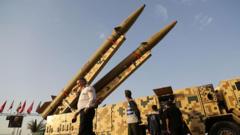
Despite its conventional military disadvantages against American forces, Iran has developed asymmetric capabilities suitable for limited conflict scenarios. Ballistic missiles, armed drones, and maritime forces allow credible retaliation without attempting to match American conventional superiority directly.
This limited war posture leverages Iran's natural geographic advantages—controlling straits, maintaining internal terrain knowledge, and operating in regional networks where American forces face logistical constraints. Escalating to full war would negate these advantages, forcing Iran into unfavorable confrontation modes where American technological and industrial superiority becomes decisively overwhelming.
International Negotiation Dynamics
The limited war approach provides Tehran with continuous negotiating leverage in international forums. Periodic escalations remind global actors of Iran's willingness to disrupt regional stability, strengthening its position in diplomatic discussions regarding sanctions relief, nuclear negotiations, and regional security arrangements.
Full peace would eliminate this leverage, forcing Iran to negotiate from weaker positions regarding economic concessions, security guarantees, and regional influence recognition. The calculated pressure approach maintains diplomatic relevance and bargaining power across multiple negotiation tracks.
Long-term Strategic Sustainability
For Iran, limited war appears sustainable across extended timeframes. The costs remain manageable, the risks remain contained, and the benefits regarding domestic politics, regional positioning, and international negotiating strength remain substantial. This Iran US limited war strategy, while requiring constant management and occasional adjustment, avoids the civilization-threatening consequences of major warfare.
Comprehensive peace, from Tehran's perspective, might require concessions exceeding the benefits obtained, potentially weakening Iranian influence throughout the Middle East and domestically. The controlled confrontation model preserves maximum strategic flexibility while preventing the catastrophic outcomes that full-scale military conflict would guarantee for both nations and the broader region.